
The Final Words of Jesus

The Final Words of Jesus

The Final Words of Jesus

Mark Vroegop

Guest Contributor

“Father, into your hands I commit my spirit.” 

These are the final words spoken by Jesus on the cross. 

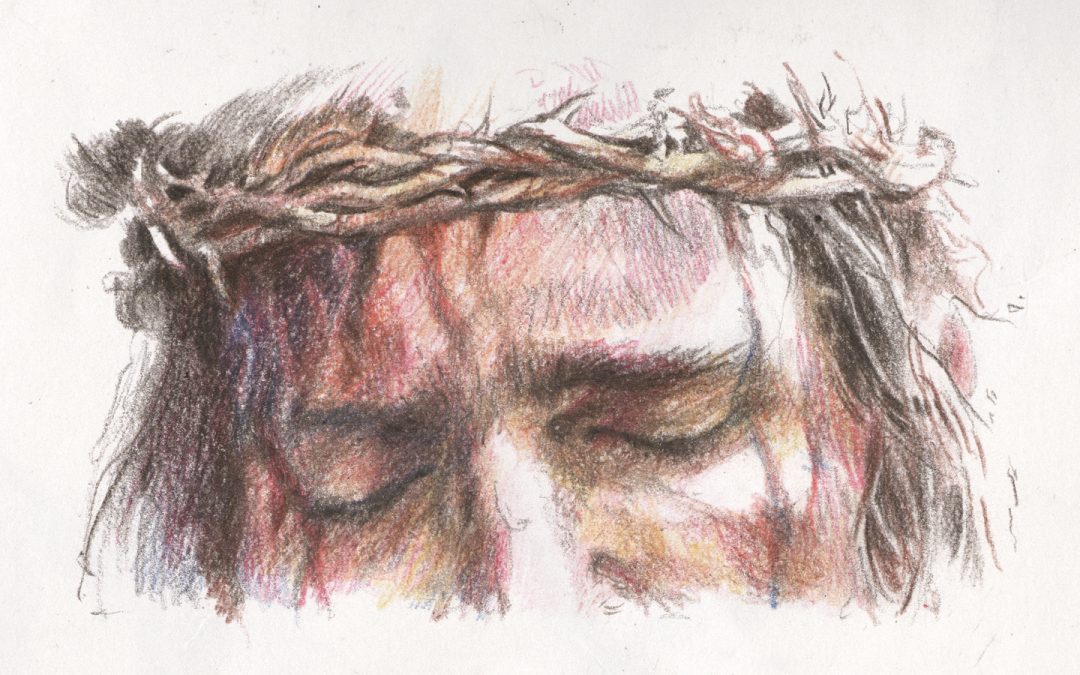
The heartbreak of false accusations, betrayal, abandonment, and the crowds cheering for crucifixion have reached their cruel conclusion. The agony of abusive mocking, the crown of thorns, flesh-ripping flogging, hands and feet nailed, the struggle for every breath, and hanging naked have reached their intended outcome. 

Death is seconds away. 

There’s nothing peaceful or serene about this moment.

Luke is the only writer to record these words. Matthew and Mark simply say that Jesus “cried out again in a loud voice” and “breathed his last” (Matthew 27:50; Mark 15:37). These are the final words of the suffering Savior reaching the finish line of His calling. 

Only a few more breaths.

Here is the perfect Son of God experiencing the outrageous effects of a sin-cursed world. Here is the obedient Savior embracing the horror of death to provide atonement. Here is the Lamb of God hanging between heaven and earth to take away the sin of the world.

His last breath. 

Slumped silence. 

Chin to chest. 

It’s over. 

Jesus died. 

His mission on earth—completed.

His statement—“Father, into your hands I commit my spirit”—like others on the cross is from the Psalms. His life and mind are so saturated with the Scriptures that verses erupt in this painful moment. Once again, He quotes a psalm of lament—Psalm 31. But He doesn’t quote a verse about hidden nets, worthless idols, the hand of the enemy, grief, or affliction. 

Instead, He quotes a verse about trust. “Into your hands I commit my spirit.” This is not only the destination of a lament; it’s the destination of His ministry, His life, and His death. 

Jesus suffers while trusting.

He dies while trusting   

In a Jewish home, Psalm 31 was often used in evening prayer as the final song before lying down to sleep. It was offered in hope that God would care for His people through the darkness of the night. It was sung in faith, believing that God’s goodness is “abundant” and “stored up for those who fear” the Lord (verse 19). Psalm 31 anticipates the steadfast love of the Lord being shown to us when we are “in a city under siege” (verse 21). It confidently proclaims that God hears our pleas for mercy even when we feel “cut off from [His] sight” (verse 22). 

So these are not only the final words spoken by Jesus. They are also the last example of His life lived in loving trust with the Father. 

His final words are not usual words. Throughout His ministry, Jesus often talked about His deep love for and connection to the Father: 

  • “Father, if you are willing, take this cup from me; yet not my will, but yours be done. (Luke 22:42) 
  • “I know my sheep and my sheep know me—just as the Father knows me and I know the Father—and I lay down my life for the sheep. (John 10:14-15) 
  • “I and the Father are one.” (John 10:30) 

Final words are important. They represent our last will and testament. Last words are chosen carefully. “Father, into your hands I commit my spirit” is no different.

His words capture the irreducible minimum of the gospel message: trust

Here is Jesus, our suffering Savior, completing His calling on earth by dying and trusting. Here is Jesus, our ultimate example, using His final breaths to live in obedient faith. Here is the Son of God staring death in the face and boldly declaring—even shouting—that He is still trusting. 

We know that the crucifixion isn’t the end of the story. But what we witness here is incredibly important.

Jesus suffered and died. But that’s not all. 

He died as He lived: trusting. 

“Father, into your hands I commit my spirit.”

He died so that those who trust in Him might live. 

About the Author

Mark Vroegop is the lead pastor of College Park Church in Indianapolis and the author of three books, including Dark Clouds, Deep Mercy: Discovering the Grace of Lament. He’s married to Sarah, and they have three married sons and a daughter. 

This article was adapted from a post originally published on markvroegop.com. 

Related Articles
3 Ways to Experience Lasting Newness This Year

3 Ways to Experience Lasting Newness This Year

HOW JESUS MAKES ALL THINGS NEW TODAYBSF Executive DirectorHappy New Year!   I love the new year. I love the idea of all things being made new. I see so much potential. I confess I am tired of the brokenness of this world and the broken hearts that inevitably follow....
The Names of Jesus

The Names of Jesus

3 STEPS TO BRIDGING THE GENERATIONAL GAPFrom the Editorial TeamWill young people be the future of the church—or the end of it? That probably depends on who you ask.    In some countries, statistics show that young people are either leaving the church at alarming rates...

Don’t Give Up On The Next Generation

Don’t Give Up On The Next Generation

3 STEPS TO BRIDGING THE GENERATIONAL GAPFrom the Editorial TeamWill young people be the future of the church—or the end of it? That probably depends on who you ask.    In some countries, statistics show that young people are either leaving the church at alarming rates...

How To Lead Where God Has Placed You

How To Lead Where God Has Placed You

3 SURPRISING TRUTHS ABOUT LEADERSFrom the Editorial TeamRosemary Jensen felt lost. After serving as a missionary in Africa for nine years, Rosemary returned to the United States and immediately felt a lack of purpose.   Then a friend told her about BSF.  “I joined a...

Submit a Comment
Our BSF staff approves each comment to maintain privacy and security. It may take 24-48 hours for your comment to be posted. Be sure to check back for replies from the author or other BSF members!

3 Lessons from a Brutal Cross

3 Lessons from a Brutal Cross

3 Lessons from a Brutal Cross

Mark Vroegop

Guest Contributor

The cross.  

It’s a symbol revered all over the world. We put crosses inside church sanctuaries and on our worship facilities. Some churches are built in the shape of a cross.  

We put crosses at graveyards. You’ve probably seen them on the side of the road marking the places of deadly accidents. 

We also celebrate the cross. We sing about it—“I will cling to the old rugged cross.” We make jewelry in the shape of the cross or use it for a tattoo. 

Truths in the Cross

However, the cross is more than a symbol.  

The cross is the meeting place of God’s justice and mercy. It’s the location of divine wrath and forgiveness. It marks the death of the eternal Son of God. It’s the darkest moment that leads to the brightest hope.  

The crucifixion of Jesus is the turning point of God’s redemptive plan. The cross opens the door for forgiveness. It provides atonement for sin. It ends the separation of God and mankind. The cross is a brutal, nasty instrument by which God demonstrates His love for us. 

Accounts of Jesus’s crucifixion are dark. Death by crucifixion was brutal. After the person’s hands were fastened to the cross beam by nails or ropes, he was hoisted on a vertical beam. His feet were nailed to a small platform. With a badly beaten body and outstretched arms, every breath was difficult and brought searing pain on the hands and the feet.

Death by crucifixion could last for days. 

Above the head of Jesus was a sign that read “King of the Jews.” It appeared that He was cursed by God, stripped of everything, and defeated. 

The cross was awful, and the biblical accounts are designed to help us to see the tragedy of this moment—to feel it deeply.

Three Lessons

The gospel writers also want us to understand the connection between what happened on Good Friday and the plan of God. 

They want us to see the suffering, the pain, and the death of Jesus. But they also want us to know that this is all part of God’s plan—a plan for people to believe. 

With that in mind, what should we learn when considering the cross?  

1. Sin is horrible

As we look at the tortured experience of Jesus and the cruelty of crucifixion, we’re reminded that this sacrifice was only necessary because of the collective rebellion of humanity.  

The cross reminds us about the brokenness of our world. 

Every conflict, every fractured relationship, every scam, every sinful word, every sickness, every virus, and every death point to our need for help—more so than we even realize. 

2. Jesus loves us

John’s gospel states, “For God so loved the world that he gave his one and only Son, that whoever believes in him shall not perish but have eternal life” (John 3:16).  

The cross is not merely a symbol of brutal execution; it is the emblem of God’s love for us. The death of the Son didn’t happen by accident. It was God’s plan to rescue us. 

He died because He loves us. 

3. God is in control

Nothing about the cross is by accident.  

At the time, the crucifixion of Jesus looked like a disaster—a complete failure. But underneath the crucifixion is a divine plan. God worked His gracious strategy to open the floodgates for redemption. 

The cross is a symbol of God’s ability to take something awful and make it amazing. A cruel tool of execution became the key to everlasting life. 

This is God’s plan for redemption.  

As dark and bleak and disastrous as this moment looked, God was fulfilling His gracious plan. 

If you need hope today amid dark days, look again to the cross. If you wonder where to look for encouragement and hope, come to Golgotha. 

Because it is there, near the cruel cross, that we see the mercy of God. It is there, at the horrific cross, that we find hope. 


About the Author

Mark Vroegop is the lead pastor of College Park Church in Indianapolis and the author of three books, including Dark Clouds, Deep Mercy: Discovering the Grace of Lament. He’s married to Sarah, and they have three married sons and a daughter. 

This article was adapted from a post originally published on markvroegop.com. 

Related Articles

3 Ways to Experience Lasting Newness This Year
3 Ways to Experience Lasting Newness This Year

HOW JESUS MAKES ALL THINGS NEW TODAYBSF Executive DirectorHappy New Year!   I love the new year. I love the idea of all things being made new. I see so much potential. I confess I am tired of the brokenness of this world and the broken hearts that inevitably follow....

The Names of Jesus

The Names of Jesus

3 STEPS TO BRIDGING THE GENERATIONAL GAPFrom the Editorial TeamWill young people be the future of the church—or the end of it? That probably depends on who you ask.    In some countries, statistics show that young people are either leaving the church at alarming rates...

Don’t Give Up On The Next Generation

Don’t Give Up On The Next Generation

3 STEPS TO BRIDGING THE GENERATIONAL GAPFrom the Editorial TeamWill young people be the future of the church—or the end of it? That probably depends on who you ask.    In some countries, statistics show that young people are either leaving the church at alarming rates...

How To Lead Where God Has Placed You

How To Lead Where God Has Placed You

3 SURPRISING TRUTHS ABOUT LEADERSFrom the Editorial TeamRosemary Jensen felt lost. After serving as a missionary in Africa for nine years, Rosemary returned to the United States and immediately felt a lack of purpose.   Then a friend told her about BSF.  “I joined a...

Submit a Comment
Our BSF staff approves each comment to maintain privacy and security. It may take 24-48 hours for your comment to be posted. Be sure to check back for replies from the author or other BSF members!


4 Reasons the Resurrection Is Good News

4 Reasons the Resurrection Is Good News

4 Reasons the Resurrection Is Good News

Mark Vroegop

Guest Contributor

All over the world, Easter Sunday will be marked by unique celebrations. Christians will rejoice in the empty tomb. It’s more than a date on the church’s calendar. Resurrection Sunday defines Christianity. 

Do you know why the resurrection of Jesus is so important?   

Consider the following four reasons. 

1. The resurrection showed that Jesus’s words are trustworthy.  

Jesus said He would be lifted up so He could draw men to Himself (John 3:14). He said He would rise again after three days (Matthew 12:40). And He also said, “I am the way and the truth and the life. No one comes to the Father except through me” (John 14:6). The empty tomb shows us that His words are worthy of our trust.   

Jesus can be believed. 

2. The resurrection proved that Jesus’s death had the approval of a holy God. 

The underlying message of the Bible is that God is redeeming a world marred by sin. And the only way to atone for sin is death. Jesus’s death was unique in that He gave His life as payment for our sin. Since He was sinless and undeserving of death, His sacrifice can be applied to those who receive Him by faith. But this only works if God approves.   

The resurrection shows that Jesus’s death was sufficient. 

3. The resurrection demonstrates that Jesus’s sacrifice on the cross defeated sin. 

Sin—the desire to be autonomous—is what is wrong with our world, and it is what causes death. The God-given consequence of sin is death—“the wages of sin” (Romans 6:23). The resurrection shows us that sin has lost its power and a way of forgiveness is now offered: “If you declare with your mouth, ‘Jesus is Lord,’ and believe in your heart that God raised him from the dead, you will be saved. For it is with your heart that you believe and are justified, and it is with your mouth that you profess your faith and are saved” (Romans 10:9-10). 

When Jesus Christ conquers death, it is a clear sign that sin is defeated. 

4. Since death was conquered, the resurrection promises eternal life for believers. 

The empty tomb is a symbol of eternal hope for those who put their faith in Jesus. To put our faith in Jesus means that we come to an awareness of our sin, recognize we need forgiveness and that we cannot self-atone, and confess our sin, asking Christ to be our Lord and Savior. 1 John 5:11-13 says:

“And this is the testimony: God has given us eternal life, and this life is in his Son. Whoever has the Son has life; whoever does not have the Son of God does not have life. I write these things to you who believe in the name of the Son of God so that you may know that you have eternal life.”

We come to Him by faith, placing all our eternal hopes in Him. 

The resurrection of Jesus Christ frees those who receive Him to be forgiven of their sin now and to know that nothing —not even death—can separate them from the love of God. The effect of this is life-changing.   

Easter matters. 

Resurrection Sunday offers believers an important reminder. An empty tomb means we have reason to hope.  

Jesus is alive! 

It’s central to Christianity.  

This is incredibly good news. 

About the Author

Mark Vroegop is the lead pastor of College Park Church in Indianapolis and the author of three books, including Dark Clouds, Deep Mercy: Discovering the Grace of Lament. He’s married to Sarah, and they have three married sons and a daughter. 

This article was adapted from a post originally published on markvroegop.com. 

Related Articles

3 Ways to Experience Lasting Newness This Year

3 Ways to Experience Lasting Newness This Year

HOW JESUS MAKES ALL THINGS NEW TODAYBSF Executive DirectorHappy New Year!   I love the new year. I love the idea of all things being made new. I see so much potential. I confess I am tired of the brokenness of this world and the broken hearts that inevitably follow....

The Names of Jesus

The Names of Jesus

3 STEPS TO BRIDGING THE GENERATIONAL GAPFrom the Editorial TeamWill young people be the future of the church—or the end of it? That probably depends on who you ask.    In some countries, statistics show that young people are either leaving the church at alarming rates...

Don’t Give Up On The Next Generation

Don’t Give Up On The Next Generation

3 STEPS TO BRIDGING THE GENERATIONAL GAPFrom the Editorial TeamWill young people be the future of the church—or the end of it? That probably depends on who you ask.    In some countries, statistics show that young people are either leaving the church at alarming rates...

How To Lead Where God Has Placed You

How To Lead Where God Has Placed You

3 SURPRISING TRUTHS ABOUT LEADERSFrom the Editorial TeamRosemary Jensen felt lost. After serving as a missionary in Africa for nine years, Rosemary returned to the United States and immediately felt a lack of purpose.   Then a friend told her about BSF.  “I joined a...

Submit a Comment

Our BSF staff approves each comment to maintain privacy and security. It may take 24-48 hours for your comment to be posted. Be sure to check back for replies from the author or other BSF members!

The Significance of Shepherds in the Bible

The Significance of Shepherds in the Bible

The Significance of Shepherds in the Bible

Connecting the Old and New Testaments

BSF Staff

From the Editorial Team

The Bible tells us a single story, weaving together threads from the Old and New Testaments. Discover how the Old Testament points to Jesus from our study of John’s Gospel: The Truth.

“The Lord is my shepherd, I lack nothing” (Psalm 23:1).  

These ancient words reach across the centuries to touch our hearts, revealing God’s shepherd heart long before His Son proclaimed, “I am the good shepherd,” in John’s gospel. Throughout generations of war and peace, famine and prosperity, pain and comfort, the surprisingly tender words of Psalm 23 have offered security and rest to God’s people no matter their circumstances.  

But humans have always struggled to respond to the voice of their Shepherd.  

Through the Old Testament, Israel’s history was filled with darkness: sin, rebellion, and exile. Using the image of a shepherd and his sheep, God expressed His sorrow as He longed for His people to repent. 

In Jeremiah 23, God rebuked the people’s leaders using shepherd imagery to express his care and concern. 

“Therefore this is what the Lord, the God of Israel, says to the shepherds who tend my people: ‘Because you have scattered my flock and driven them away and have not bestowed care on them, I will bestow punishment on you for the evil you have done,’ declares the Lord. ‘I myself will gather the remnant of my flock out of all the countries where I have driven them and will bring them back to their pasture.’” (Jeremiah 23:2-3a) 

Again, in Ezekiel, God judged the shepherds of Israel who did not care for the vulnerable among them. And in an incredible moment, He declared, “I myself will search for my sheep and look after them” (Ezekiel 34:11b).

Jesus, the Good Shepherd

Yet these words were followed by more than 400 years of silence from God. Israel was left occupied by Rome under the care of misguided Pharisees.  

And then, in a lowly stable, the silence ended. God Himself came down to earth to seek the lost and redeem His people. 

“I am the good shepherd,” Jesus proclaimed, “I know my sheep and my sheep know me—just as the Father knows me and I know the Father—and I lay down my life for the sheep” (John 10:14-15).  

Jesus didn’t simply claim to be like a shepherd, He claimed to be the Good Shepherd. This is the same Shepherd of Jeremiah and Ezekiel, who gathers the remnant of His flock, searches for His sheep, and promises to protect and care for those He calls His own. 

“My sheep listen to my voice; I know them, and they follow me. I give them eternal life, and they shall never perish; no one will snatch them out of my hand. My Father, who has given them to me, is greater than all; no one can snatch them out of my Father’s hand. I and the Father are one” (John 10:27-30).  

In Jesus, the promises of Israel’s prophets were fulfilled.

Jesus, Your Shepherd

But God did not come to save Israel alone. Jesus said, “I have other sheep that are not of this sheep pen. I must bring them also. They too will listen to my voice, and there shall be one flock and one shepherd” (John 10:16). 

Through these promises in John, the words of Psalm 23 come back to us. Jesus is our Good Shepherd, our source of hope and eternal life. 

Through Jesus, we lack nothing in a world that leaves us longing for more and cannot satisfy our deepest longings. Amid an anxious news cycle, we find rest and contentment. When circumstances change, the Good Shepherd holds us fast. How will the promise of Christ as your Shepherd change your heart and shape your mind today? 

Related Articles

3 Ways to Experience Lasting Newness This Year

HOW JESUS MAKES ALL THINGS NEW TODAYBSF Executive DirectorHappy New Year!   I love the new year. I love the idea of all things being made new. I see so much potential. I confess I am tired of the brokenness of this world and the broken hearts that inevitably follow....

The Names of Jesus

3 STEPS TO BRIDGING THE GENERATIONAL GAPFrom the Editorial TeamWill young people be the future of the church—or the end of it? That probably depends on who you ask.    In some countries, statistics show that young people are either leaving the church at alarming rates...

Don’t Give Up On The Next Generation

3 STEPS TO BRIDGING THE GENERATIONAL GAPFrom the Editorial TeamWill young people be the future of the church—or the end of it? That probably depends on who you ask.    In some countries, statistics show that young people are either leaving the church at alarming rates...

How To Lead Where God Has Placed You

3 SURPRISING TRUTHS ABOUT LEADERSFrom the Editorial TeamRosemary Jensen felt lost. After serving as a missionary in Africa for nine years, Rosemary returned to the United States and immediately felt a lack of purpose.   Then a friend told her about BSF.  “I joined a...

Study with BSF!

Discover Truth through John’s Gospel

How has John’s Gospel: The Truth changed you?

Our BSF staff approves each comment to maintain privacy and security. It may take 24-48 hours for your comment to be posted. Be sure to check back for replies from the author or other BSF members!

The Significance of Bread in the Bible

The Significance of Bread in the Bible

The Significance of Bread in the Bible

Connecting the Old and New Testaments

BSF Staff

From the Editorial Team

The Bible tells us a single story, weaving together threads from the Old and New Testaments. Discover how the Old Testament points to Jesus from our study of John’s Gospel: The Truth.

The account of God’s “bread from heaven,” or “manna,” appears first in Exodus 16 and is remembered throughout Israel’s history as evidence of God’s power and love.

The book of Exodus opens with God’s people, the Israelites, trapped in backbreaking slavery to Egypt. Through a series of powerful signs, God empowered Moses to free the people and lead them out of Egypt toward a land that God promised to their ancestor, Abraham (Exodus 6:1-13).

But the path to the promised land was through the desert. The people became hungry. They wondered if God saved them only to let them starve! But God heard them. He told their leader, Moses, “I will rain bread from heaven for you” (Exodus 16:4a). The bread in the morning appeared for 40 years until the people reached the promised land and ate its food for the first time (Joshua 5:12).

Whether rescuing them from slavery or hunger, God continued to provide for His people.

Bread of Life

Thousands of years later, God again had compassion for a crowd of hungry people. As Jesus stood before a crowd that numbered in the thousands, struggling to reach Him for healing and straining to hear His teaching, He prayed over a small collection of bread, miraculously multiplying it to feed every person in the crowd (John 6:10-11).  

Then the people remembered the bread from heaven (John 6:31)—the manna God gave their ancestors. Was Jesus a prophet like Moses?

Jesus reminded them that Moses did not give them bread; God did! In the past, God provided for His people physically with manna. But this bread only offered temporary life. Jesus, the bread of heaven, was pointing toward something better in His offer of eternal life. 

Jesus explained, “I am the bread of life. Your fathers ate the manna in the wilderness, yet they died. But here is the bread that comes down from heaven, which anyone may eat and not die. I am the living bread that came down from heaven. Whoever eats this bread will live forever” (John 6:48-51a).

Those who ate the manna in the wilderness or the miraculous loaves in Israel would eventually die. The physical provision was temporary. They needed more. They needed eternal provision. They needed “bread” that would give them life forever. Jesus proclaimed Himself to be that bread!

Bread Broken for Us

Jesus came down from heaven to be life for us. Yet something even more miraculous happened—the “bread of life” was “broken” for us.

Before His death, during the last meal with His disciples, Jesus took bread, broke it, and passed it around to them, saying, “This is my body given for you; do this in remembrance of me” (Luke 22:19b).

Sound familiar? The same God who provided bread from heaven is offering us life today!

Will you trust God to provide satisfaction for your deepest spiritual needs? Will you accept this new life that Jesus offers?

Related Articles

3 Ways to Experience Lasting Newness This Year

HOW JESUS MAKES ALL THINGS NEW TODAYBSF Executive DirectorHappy New Year!   I love the new year. I love the idea of all things being made new. I see so much potential. I confess I am tired of the brokenness of this world and the broken hearts that inevitably follow....

The Names of Jesus

3 STEPS TO BRIDGING THE GENERATIONAL GAPFrom the Editorial TeamWill young people be the future of the church—or the end of it? That probably depends on who you ask.    In some countries, statistics show that young people are either leaving the church at alarming rates...

Don’t Give Up On The Next Generation

3 STEPS TO BRIDGING THE GENERATIONAL GAPFrom the Editorial TeamWill young people be the future of the church—or the end of it? That probably depends on who you ask.    In some countries, statistics show that young people are either leaving the church at alarming rates...

How To Lead Where God Has Placed You

3 SURPRISING TRUTHS ABOUT LEADERSFrom the Editorial TeamRosemary Jensen felt lost. After serving as a missionary in Africa for nine years, Rosemary returned to the United States and immediately felt a lack of purpose.   Then a friend told her about BSF.  “I joined a...

Study with BSF!

Discover Truth through John’s Gospel

How has John’s Gospel: The Truth changed you?

Our BSF staff approves each comment to maintain privacy and security. It may take 24-48 hours for your comment to be posted. Be sure to check back for replies from the author or other BSF members!

You Are Equipped to Follow Jesus

You Are Equipped to Follow Jesus

You Are Equipped to Follow Jesus

Two things we learn about true discipleship 

Karen McNary

BSF Director of Global Cultural Engagement

What does it mean to be a disciple?   

There were many people who followed Jesus. John tells us that great crowds of people were always at Jesus’s heels. The more Jesus performed miracles, the more people followed Him, asking for healing, questioning His motives, and seeking more of His teaching.  

However, just because great crowds literally followed Jesus does not mean they were spiritually following Jesus. Only a small number of these people became true disciples of Christ.  

So, how do we know what it really looks like to follow Jesus? 

John 12 and 13 give us a picture of authentic discipleship that we can follow in our daily lives. Through His disciples’ willingness to give what was costly and serve as the lowly, we learn that every follower of Jesus is equipped by the Spirit for true discipleship.   

No gift is too costly  

What would convince you to give up your salary for a year? Can you imagine a gift this costly?  

In John 12, Mary anoints Jesus’s head and feet with a pint of nard. Scholars estimate this perfume was worth an entire year’s salary! This gift could have given Mary economic security at a time when women were dependent on others. Yet she gave willingly. Was this a demonstration of trust that the God who raised her brother from the dead would care for her? Certainly, Mary showed her conviction that Jesus was worthy of her best. 

It’s been said that giving is an act of worship. Giving resets our hearts to love God alone. Our decision to give despite the cost (or our unwillingness to offer what we have) shows what we value most.   

{

Giving resets our hearts to love God alone.

{

Each of us has been called to give, and giving will differ based on the person. While it’s not uncommon to place higher importance on gifts that have a higher currency amount like Judas did, Jesus sees our hearts. He knows us intimately, which includes what we value. For some, donating treasure is easy, while giving time is a challenge. For others, giving talent is easy, but offering time and treasure is a struggle.   

Mary’s example of willing, sacrificial giving causes me to examine my heart about what I treasure. Is it sacrificial or self-centered? Am I willing to give despite potential criticism? What ways may God be prompting you to rethink how and what you give? 

No role is too lowly 

Despite the quality of her gift, Mary did not hand it to Jesus in a way that honored herself. Instead, she humbly poured the perfume on His feet, using her hair as a towel.  

She served in humility regardless of how she would be viewed.  

Remarkably, the same is true of Jesus Himself. Although He is God and King of all, He served rather than asking to be served. In John 13, Jesus took up a towel like an ordinary household servant and washed His disciples’ feet. Jesus even tenderly and lovingly washed the feet of Judas, who He knew would soon betray Him.  

Growing in our discipleship means putting aside our desire to be extraordinary for God. It means developing our hearts to be willing to serve in the most ordinary ways.  

{

Growing in our discipleship means developing our hearts to be willing to serve in the most ordinary ways.

{

Peter, who was one of the disciples having his feet washed in John 13, was transformed by the experience. He devoted His life to serving God at any cost. He later wrote to encourage believers to follow the example of Christ, saying, “Each of you should use whatever gift you have received to serve others, as faithful stewards of God’s grace in its various forms” (1 Peter 4:10). The term “whatever” seems so simple and harmless until an opportunity comes up that doesn’t seem particularly appealing! For example, the most difficult position to fill on a Sunday morning at my local church is volunteering for the nursery. While it’s easy to say, “It’s not my gifting,” all it really takes is a willing heart to serve a real need.  

This passage challenges me to ask, are there roles I consider beneath me? Or people I think aren’t deserving? What motivates me most—the need or my own comfort? 

We do not need special training or unique giftings to be Jesus’s disciples. Authentic discipleship means recognizing that the Holy Spirit has already equipped us to be His followers. He calls us to give freely from what He’s given us and to serve humbly, meeting the needs of the community where He’s placed us.  

About the Author

Karen McNary served as a Children’s Leader, Substitute Teaching Leader, Teaching Leader, Area Personnel, and, most recently, as a Skills Coach for BSF prior to joining the staff in April 2021. She is originally from Louisville, KY, and for the past 20 years has called Charlotte, NC, home. She has been married to her husband, Keith, for 27 years, and together they parent three young adult sons, who attended the BSF Student Program for many years.

Related Articles

3 Ways to Experience Lasting Newness This Year

HOW JESUS MAKES ALL THINGS NEW TODAYBSF Executive DirectorHappy New Year!   I love the new year. I love the idea of all things being made new. I see so much potential. I confess I am tired of the brokenness of this world and the broken hearts that inevitably follow....

The Names of Jesus

3 STEPS TO BRIDGING THE GENERATIONAL GAPFrom the Editorial TeamWill young people be the future of the church—or the end of it? That probably depends on who you ask.    In some countries, statistics show that young people are either leaving the church at alarming rates...

Don’t Give Up On The Next Generation

3 STEPS TO BRIDGING THE GENERATIONAL GAPFrom the Editorial TeamWill young people be the future of the church—or the end of it? That probably depends on who you ask.    In some countries, statistics show that young people are either leaving the church at alarming rates...

How To Lead Where God Has Placed You

3 SURPRISING TRUTHS ABOUT LEADERSFrom the Editorial TeamRosemary Jensen felt lost. After serving as a missionary in Africa for nine years, Rosemary returned to the United States and immediately felt a lack of purpose.   Then a friend told her about BSF.  “I joined a...

Submit a Comment

Our BSF staff approves each comment to maintain privacy and security. It may take 24-48 hours for your comment to be posted. Be sure to check back for replies from the author or other BSF members!

Pin It on Pinterest