
Sharing in Our Brokenness

Sharing in Our Brokenness

Sharing in our brokenness

BY SANDY ALLEN & BENNETT ROLAN

S andy Allen was on her knees, begging God for a way out. As a long-time BSF teaching leader, she was steeped in God’s Word and committed to seeking Him in prayer.  

But Sandy knew her debilitating condition had returned, and she cried out to her Savior 

For months, she pushed through the fog. She would deliver her BSF lecture, then collapse at home in exhaustion.  

Pounding thoughts would suffocate her joy and desire for living.  

Life is just too hard.  

Nothing is worth it. 

Your life is worthless.  

The very part of what makes you youis worth nothing.”  

Years of Suffering

T wenty-five years earlier, Sandy was diagnosed with Major Depressive Disorder. After medical treatment and therapy, she slowly recovered her personality and worked to restore her relationships 

“Over the years I faced the darkness many times,” Sandy said. “God has seen me through, and every time I thought, ‘Whew that is over. Surely it won’t come back again.’  

She was hopeful the battle was over. But those familiar thoughts returned in the fall of 2018 

“The scary part is that I couldn’t see it,” she said. “I thought I was fine until my depression started affecting others.” 

Recognizing the signs, Sandy sought professional help. Today, her relationship with God is stronger, and her faith is deeper. But Sandy’s journey to this point has been difficult 

“I thought everyone had those days when they hated their lives and wanted just to die when the living felt too hard to do,” Sandy said. People say things like,Tomorrow you will feel better, it’s just a rough patch, life can be hard sometimes.’ But I was overwhelmed and aching inside, without any real idea of how to make things better. But, boy, did I try.”  

“I was overwhelmed and aching inside, without any real idea of how to make things better. But boy, did I try.”

She tried vitamins, sleep, exercise, diet, caffeine, vacation, more work, less work. Even prayer, worship, church counsel and Bible study did not alleviate the growing depression and anxiety.   

Nothing changed the way I felt deep down, about myself and my life,” she said. Life was too hard, overwhelming. People seemed mean. I didn’t really want to do anything.   

Every day felt like I was walking through some sort of thick mud trudging along. The tears would fall, I would think, ‘What’s the point of this life – it seems to just get harder.’   

Finally, a compassionate friend said, “I think you might be depressed. After research and multiple doctor’s visits, Sandy accepted that she had a condition many of her BSF friends could not understand.  

But the God who created Sandy and knew her thoughts intimately met her in the despair.  

“I remember lying in bed,” Sandy said, “the tears falling, and crying out, Lord I know You are God, but You feel so far away. I need You close to help me though. And in the darkness, I sensed His presence, remembered His words that He would never leave me or forsake me,’ and I knew He would carry me through somehow.  

“I remember lying in bed,” Sandy said, “the tears falling and crying out, ‘Lord I know you are God, but you feel so far away. I need you close to help me through.’ “

After years of professional counseling, medical treatment and family support, Sandy feels compelled to share her story.  

And through her honesty, we can find freedom in sharing our own struggles and moments of brokenness. Together, we can celebrate God’s faithfulness, acknowledge our weaknesses and rely on one another as we seek Christ in a fallen world.  

Uniting in Trials

L ike Sandy, many of us face circumstances, diagnoses and difficult relationships that our BSF family may not understand. We walk into our BSF group each week feeling lonely and misunderstood, trying to hide the deep places that reveal our vulnerabilities 

But 2 Corinthians 12:9 promises God’s power “is made perfect in weakness.” And through our painful experiences, God strengthens the body of believers.  

“… So that there should be no division in the body, but that its parts should have equal concern for each other. If one part suffers every part suffers with it; if one part is honored, every part rejoices with it” (1 Corinthians 12:25-26). 

Our study of Acts and Letters of the Apostles will bring our sin, shortcomings and pain to light. Instead of hiding these moments, we can encourage group members to share how God is working in the midst of those trials.  

The Power of Faithful Community

T o help us navigate these difficult topics and conversations, God’s Word gives wonderful insight into how the early Church pursued gospel-centered unity.  

They committed to study, fellowship and prayer.

“They devoted themselves to the apostles’ teaching and to fellowship, to the breaking of bread and to prayer.” Acts 2:42 

Which person in your group today needs your prayers, or who needs to know you are praying for them? How will you reach out to them this week?

They put others’ needs above their own.

“Do nothing out of selfish ambition or vain conceit. Rather, in humility value others above yourselves, not looking to your own interests but each to the interests of the others. In your relationships with one another, have the same mindset as Jesus Christ.” – Philippians 2:3-5 

Whose needs are your focus? How can you ask God to help you show someone else that they are valuable?  

They were quick to listen and slow to anger.

“My dear brothers and sisters, take note of this: Everyone should be quick to listen, slow to speak and slow to become angry, because human anger does not produce the righteousness that God desires.” – James 1:19-20 

Listening can be hard, but will you challenge yourself to ask more questions as you interact with those in your group?  

Unity was a common goal.

“Be completely humble and gentle; be patient, bearing with one another in love. Make every effort to keep the unity of the Spirit through the bond of peace.”Ephesians 4:2-6 

What can you do to demonstrate humility, patience and love in your relationships with others? 

They sought to forgive one another.

“Bear with each other and forgive one another if any of you has a grievance against someone. Forgive as the Lord forgave you. And over all these virtues put on love, which binds them all together in perfect unity.” – Colossians 3:13-14 

Who do you need to forgive, because the Lord has forgiven you? When will you take action to reach out and forgive?


Walking in the Valley

F or those who struggle with depression, or see another who is hurting, Sandy Allen shared some helpful thoughts from her experience.

God does not expect you and me to do everything.

Brothers and sisters, choose seven men from among you who are known to be full of the Spirit and wisdom. We will turn this responsibility over to them and will give our attention to prayer and the ministry of the word.’ ” Acts 6:3-4 

Sometimes our trials increase because we take on extra things. 

I love this truth: God’s plan is for His work to be divided among the body.  

When the anxiety increases, or the depression seems worse, allow yourself to let something go. Ask the Lord, ”What are those things you are asking me to do, and what can I stop for this tough season of my life?” 

Depression is a trial.

In all this you greatly rejoice,  though now for a little while  you may have had to suffer grief in all kinds of trials. These have come so that the proven genuineness of your faithof greater worth than gold, which perishes even though refined by firemay result in praise, glory and honor  when Jesus Christ is revealed.” 1 Peter 1:6-7 

Depression,  anxiety and  living with a loved one who struggles with it is a trial. 

In every trial  there  is  an  opportunity for Christ to reveal Himself. Seeking Him in the hard times proves that our faith is real  and that  we know He is the one to turn to. 

And in these verses,  we have the promise  that  as our faith is refined,  our lives will bring praise and glory to Jesus. 

So God is at work in the present hard time. Your faith is being made stronger while living with depression or  with  a loved one who struggles. 

God’s purposes for you are prevailing. 

If you see someone struggling, reach out.

“While the man held on to Peter and John,  all the people were astonished and came running to them in the place called Solomon’s Colonnade.” Acts 3:11 

Who among you is hurting?  How can you,  through prayer and God’s compassion, reach out and give them a helping hand? Let them  hold onto you and  bring them to Jesus.  

Maybe ask: 

How  can  I  join you in prayer? 

What would encourage you? 

Can I give you a ride to BSF next week?  

Can I sit beside you during the lecture? 

Would you like to work on the questions together this week? 

When we notice someone is hurting, we do not have to fix them. That is God’s job. But we can be there, a place  to  hold onto,  in times of weakness. 
Worshipping out of the depths

Worshipping out of the depths

Worshipping “out of the depths”

BY KEITH AND KRISTYN GETTY
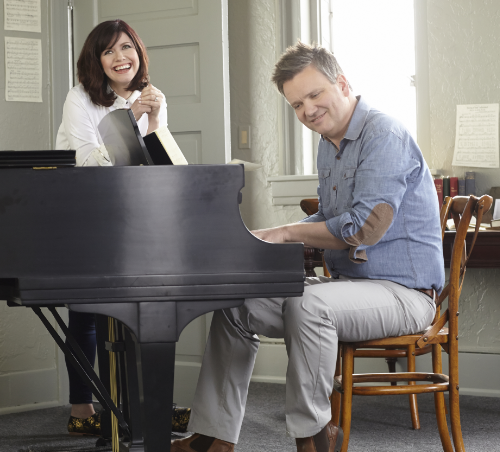
Keith and Kristyn Getty occupy a unique space in the world of music today as preeminent modern hymn writers. They have created a catalogue of songs teaching Christian doctrine, crossing several genres of composition, which are sung the world over.

F or most people including believers“the depths” is the last place from which a song should be sung. We reserve singing for the higher moments of life and faith. For rejoicing. For reflection. For entertainment. For religious tradition. 

But the Psalms remind us that singing is a sacred act divinely intended for everything we will experience in this life. This includes a key part that today’s worship is often missing: lament. 

The song I Will Wait for You is very special to us. It is a setting of Psalm 130a modern reflection of what it means to trust God in the midst of trials. Psalm 130 is often referred to as the De profundis, a Latin phrase meaning “out of the depths.” “The depths” is both figuratively and literally an expression of the deepest canyons of the ocean and of the heartplaces where light cannot reach and where any hope for finding the surface above is constantly being crushed by pressure and darkness.

This was a favorite psalm of everyone from Augustine to Martin Luther to Charles Wesley because it connected real lifefull of angst and painwith a real God who is ever present, especially in the depths.  

It reminded them thenas it reminds us nowthat God invites His children not only to rejoice before Him, but also to bring Him our struggles. 

One of our goals over the next five years is to set most of the Psalms to music, rediscovering creative ways we can sing together regardless of where we arewhether soaring on the heightsin excelsisor buried beneath the depthsde profundis 

This song is a key cog in the wheel of our new project meant to reinvigorate the congregational act of singing the Psalms. It is a heartfelt expression of the gospels mirrored invitation of the Psalms to draw near to Christ not from a place of pride or privilege, but from a place of realness and brokenness, aware of the vast, impassable expanse that lies between the ocean floor and the celestial ceiling. Indeed, unless Someone higher than us spans this chasm on our behalf, we have no hope. But because Christ has already fully done this for us at the cross, we are no longer relegated to remaining quiet in the depths. We can cry out because our Savior has felt the same darkness and cold as us, emerging from our depths victorious and creating by His grace the path of honesty and hope for us to follow.  

He knows what it feels like to cry out from the depths Himself.  

The ancient Psalms express many things we so desperately need in the modern agenot just in our music, but also in our very lives as they are lived together as a spiritual act of worship. The Psalms timelessly paint immutable images of the vast array of the majesty of God. They speak to His wonder and splendor, as well as the eternally creative nuance with which He speaks, moves and employs the mysteries of time and space. But the Psalms also prompt us to behold the more transcendent, awe-inspiring aspects of his powerful deity. They acknowledge that He is also a righteous judge, longing for and guarding His people with a holy jealousya Sovereign whose holiness cannot tolerate evil.  

Thus collectively, the Psalms portray a compellingly big picture of the God of the Bible, expressing in these observations and interactions with Himand with life itselfevery human emotion we can feel from praise, celebration, shouting and dancing, to crying, anger, repentance and lament  

This is indeed a masterful Psalm of lamenta healthy outlet of faith and expression that we often lack in our worship. Plainly stated, our worship experiences often leave out the biblical, healthy act of lament. We have lost the sacred invitation to cry out from the depths.  

Our hope is this hymn speaks to many people and allows us all to see with fresh eyes the clear invitation from Scripture to spend time waiting on the Lord … no matter how deep in the depths we may be. 

Museum of the Bible brings God’s Word to life

Museum of the Bible brings God’s Word to life

Museum of the Bible brings God’s Word to life

Museum of the Bible brings God’s Word to life

BY BENNETT ROLAN | BSF BLOG EDITOR

I n the heart of Washington D.C., Genesis 1 soars 40 feet above street level, engraved on the Museum of the Bible’s bronze entrance. The text reminds us that God’s Word stands firm in a changing culture. That narrative continues throughout this spectacular facility, where cutting-edge technology and interactive displays present the Bible’s impact on human history 

“It’s a safe place to come and engage with a Book that’s been speaking for itself for thousands of years,” Museum of the Bible CEO Ken McKenzie said. “We are hoping to instill a hunger and desire to understand God’s Word.”  

Immersive Experience

Through immersive exhibits, the Bible and its history come to life as visitors walk through a firstcentury village, view live performances and explore a multitude of ancient and modern artifacts. Museum officials estimate it would take nine 8-hour days to view the entire collection.  

 “I really enjoy meeting with a blend of people who also say, ‘This is my Book,’ ” Ken said. “Walking through the museum, you might meet a group of nuns, an archbishop from the Armenian church or BSF class members. They all have different ways of looking at faith, but the one thing that brings them together is the Book.”   

For one Amish family, a virtual reality exhibit of Israel fulfilled a life-long dream. 

“As they were walking out, one woman said, ‘As Amish, we don’t travel very far, and I’ve always dreamt of visiting the Holy Land. Now that I’ve done this, I’ve been there,’ ” Ken said. “The museum was able to give her an experience she wouldn’t have had otherwise.” 

A Capital Presence

The concept for the museum began in Dallas, when two private collectors planned to showcase biblical artifacts in a short-term exhibition. The plan for a permanent museum took root, and early benefactors scouted properties in Dallas, New York and Washington, D.C.   

“Washington was chosen because of the relevancy of the museum itself,” Ken said. “I can’t think of a better time than now to point people back to the Bible. It’s a book about hope, and I think that’s a multi-generational message that resonates with people, especially in the nation’s capital.”   

The museum’s purpose is to educate visitors about the Bible’s unique divine content, relevance and impact on history and culture.   

Tackling Controversy 

From an academic perspective, the museum does not avoid controversial history. In one special exhibit, a highly edited Bible featuring only 232 chapters, called The Slave Bible, sits across from The Lincoln Bible, an iconic symbol of freedom.  

The Slave Bible, created in 1808, includes out-of-context passages about slavery and was used by slave traders to reinforce the evil institution. In contrast, The Lincoln Bible, featuring an ornament of Abraham Lincoln breaking the chains of slavery, was purchased by a group of freed slaves in 1863 to celebrate the Emancipation Proclamation.    

“To get the full grasp of the history of the Book, our curatorial staff is committed to representing the entirety of the Bible’s impact,” Ken said. “In doing so, we can present the Bible as an exceptionally wonderful book that has been misapplied and misused in human hands. The display shows that the Book’s entire narrative is necessary to understand God’s story.”    

Unity in the Word

From ancient artifacts to modern culture, the museum presents one defining theme: the Bible’s ability to unite those who believe its truths.   

“One thing that the museum does well is to encourage people to understand other points of view,” Ken said. “I would say it encourages Christians to see how the book has impacted other people and other areas of life. Then we can see what we have in common, instead of looking at what separates us. Understanding the Bible’s significance in the big scheme of things just adds to the richness of what it means to be a follower of Christ.”   

The Museum of the Bible encourages visitors to engage more deeply with God’s Word and others. Whether we’re making a trip to Washington, D.C., or simply accessing collections and tools online, the Museum of the Bible’s exhibits give us a unique opportunity to discuss God’s Word with family, friends, co-workers and neighbors.  

For those who want to explore the museum’s exhibits without traveling to Washington D.C, there are several resources available at museumofthebible.org

Second Floor

The Impact of the Bible

Third Floor

The Stories of the Bible

Fourth Floor

The History of the Bible

Fifth – Sixth Floors

Upper Gallery

World Stage Theater

Stations of the Cross (ends May 27)

Amazing Grace – The Musical

The Book Minute

Spend a minute with one of the best-selling books of all time with The Book Minute from Museum of the Bible. These powerful videos will deliver the history, narrative and impact of the Bible straight to your inbox every Monday. 

Introducing Generation Z

Introducing Generation Z

Introducing

Generation Z

Introducing Generation Z

BY KIM HURTADO
BSF RESEARCH ANALYST
“… we will tell the next generation the praiseworthy deeds of the LORD,
His power, and the wonders He has done.” – Psalm 78:4b

I recently asked my son what he wanted to be when he grew up.  

Expecting to hear the words “doctor,” “engineer” or “behavioral scientist,” he quickly dashed those hopes. 

“YouTuber, mom,” he said. “I want to be a YouTuber.”  

It’s no wonder. Last year, a 7-year-old reported earning $22 million from his personal YouTube channel, Ryan Toysreview, where nearly 19 million subscribers watch him unbox and play with toys. 

Meanwhile, my daughter burst out laughing as she scrolled through my iPhone pictures and said, “Aww … what a cute old-people selfie!” When I asked, “What’s an old-people selfie?,” she fell on the floor in hysterics.  

(Apparently, an “old-people selfie” is a photo of your entire face. Young people intentionally crop out half of a face to make their photography more interesting.) 

Ladies and gentlemen, meet Gen Z.   

Who is Gen Z?

Gen Z are those born from 1999 to 2015. This generation currently constitutes the largest percentage of the country’s population, eclipsing American Baby Boomers, who held the majority for close to 50 years. 

The old order is fading, and the new order is growing 

What do Gen Zers believe?

The U.S. marketing research firm Barna Group says that unlike previous generations, when it comes to religious identity, only 4% of Gen Z have a biblical worldview. 

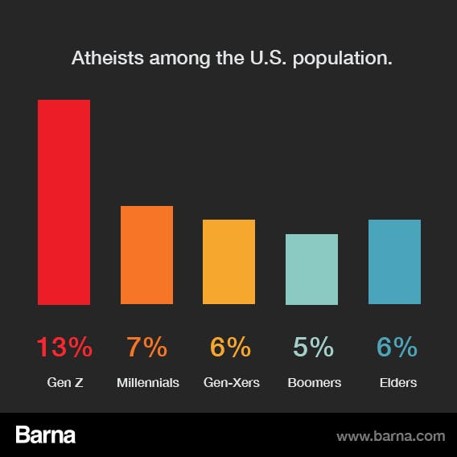
The percentage who identify as atheist – 13% – is double that of all U.S. adults. That may seem like a small number, but Americans are saying, “there is no God” at increasingly younger ages.

According to Pew Research Center, the “nones,” or people who do not identify with any religion, are at the highest percentages in history. This includes 23% of all U.S. adults and 35% of U.S. adult Millennials, a trajectory that Gen Z will continue. 

And more than half say that happiness is their ultimate goal in life, which equates to financial success.

What’s influencing them?

Gen Z is the first generation to have been exposed to smart technology and social media from birth. According to Barna, 57% of kids and teens look at the screen four or more hours per day; 26% spend eight or more hours a day on their devices – that’s an entire work day!  (My son requires an entire power strip to charge his devices!) 

In this digital world and as a result of social media, we have entered the era of the “democratization of influence.” In previous generations, family heritage and upbringing were the top influences in forming a person’s identity. But Barna reports that Gen Z ranks these fifth.  

While family, teachers, pastors or coaches used to be the primary voices of influence, we now compete with a multitude of worldviews streamed directly to kids’ devices. This generation is being discipled by their smart phones, YouTube and Google. 

This generation is being discipled by their smart phones, YouTube and Google. 

As a result, Gen Z is exposed to a false sense of reality. YouTubers often spend hours editing videos to portray a personal brand. On social media, kids are less likely to cultivate meaningful relationships because of an increased pressure to create a flawless, happy, successful or funny persona.   

The same technology that was designed to “make the world more open and connected,” which was Facebook’s original mission statement, is helping kids disengage from physical communities and relationships. 

Therefore, it should not surprise us that we are seeing an exponential rise in depression and lonliness.

From 2000 to 2016, the U.S. suicide rate increased 30%. Among females, the number skyrocketed to 50%. For teen girls, the number tripled since 2000. 

We can help

Surprisingly, Barna research shows that this young generation – whose top priority is attaining happiness and financial success – is willing to ask difficult questions about the meaning of life. The study reports that the rise in moral relativism, or the lack of a strong moral code, arises more from a confusion about truth than an actual rejection of it.  

So, this generation is not necessarily rejecting the God of the Bible. They know little about Him.  

What an opportunity! In love, patience and understanding, let us help them see the Lord. 

Judges 2:10 reminds us that there were consequences when the Israelites failed to instruct their children in the ways of the Lord.

 “After that whole generation had been gathered to their fathers, another generation grew up, who knew neither the Lord nor what he had done for Israel.” (Judges 2:10)

Let us not repeat that.  

My hope is that God’s Word awakens an excitement to reach the next generation for Christ, instilling a sense of purpose and mission in each and every one of us.   

We do not have to know all the answers. We can simply share what God has done for us. Through our time in God’s Word in our BSF studies, we have much to share!  

As we look beyond ourselves, let us be willing to engage – not just with our minds and our theology, but with a humble heart, free of judgment. We can have a heart that is willing to say, “I don’t know all the answers. But I know that I love you. Let’s search for the answer together.”   

“My people, hear my teaching; listen to the words of my mouth.  I will open my mouth with a parable; I will utter hidden things, things from of old – things we have heard and known, things our ancestors have told us. We will not hide them from their descendants; we will tell the next generation the praiseworthy deeds of the LORD, his power, and the wonders he has done. He decreed statutes for Jacob and established the law in Israel, which he commanded our ancestors to teach their children, so the next generation would know them, even the children yet to be born, and they in turn would tell their children. Then they would put their trust in God and would not forget his deeds but would keep his commands.” (Psalm 78: 1-7)

Passing the torch

Passing the torch

Passing the torch

BY BENNETT ROLAN |
BSF BLOG EDITOR
“One generation commends your works to another,
they tell of your mighty acts.” – Psalm 145:4

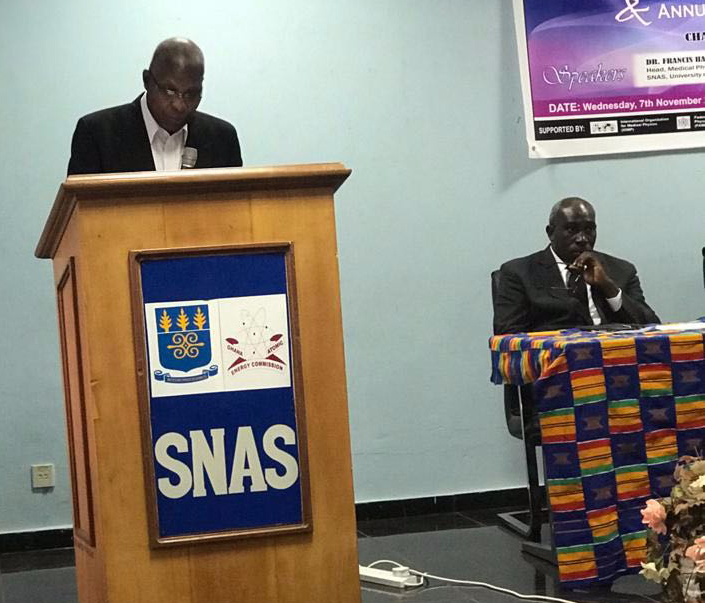
G od gifted John Humphrey Amuasi with a passionate mind.  

As a medical physicist, John’s research achievements are vast, and his accolades are many. But John is driven by more than professional success. His heart for the Lord compels him to advance the gospel of Christ while pursuing his research for the prevention, diagnosis and treatment of diseases. 

Before John became a celebrated medical physicist or a beloved BSF board member, he was a young Christian who learned from a mature generation of believers.  

“Challenges are what make life interesting, and overcoming them is what makes life meaningful. The great mentoring I personally received from my supervisors was an example for me to follow,” John said. “I need God’s grace to practice living for Jesus with a willing heart in the workplace as well as in the church, (knowing) that Jesus is with me and watching everything.” 

Growing up in Ghana, John seized every opportunity to pursue his passion. The path took him around the world and allowed him to collaborate with the pre-eminent medical physicists of his generation. John has served more than 40 years on the Ghana Atomic Energy Commission, where he was dean of the School of Nuclear Sciences, and as an expert and consultant for the International Atomic Energy Agency. 

His work included tumor detection and treatment using imaging technologies (CT, SPECT, PET and MRI). Among his most highly regarded achievements was helping establish the first two National Radiotherapy and Nuclear Medicine Centers in the two major cities in Ghana Accra and Kumasi to “manage the menace of cancer in the West African sub-region.” 

A heart for Christ

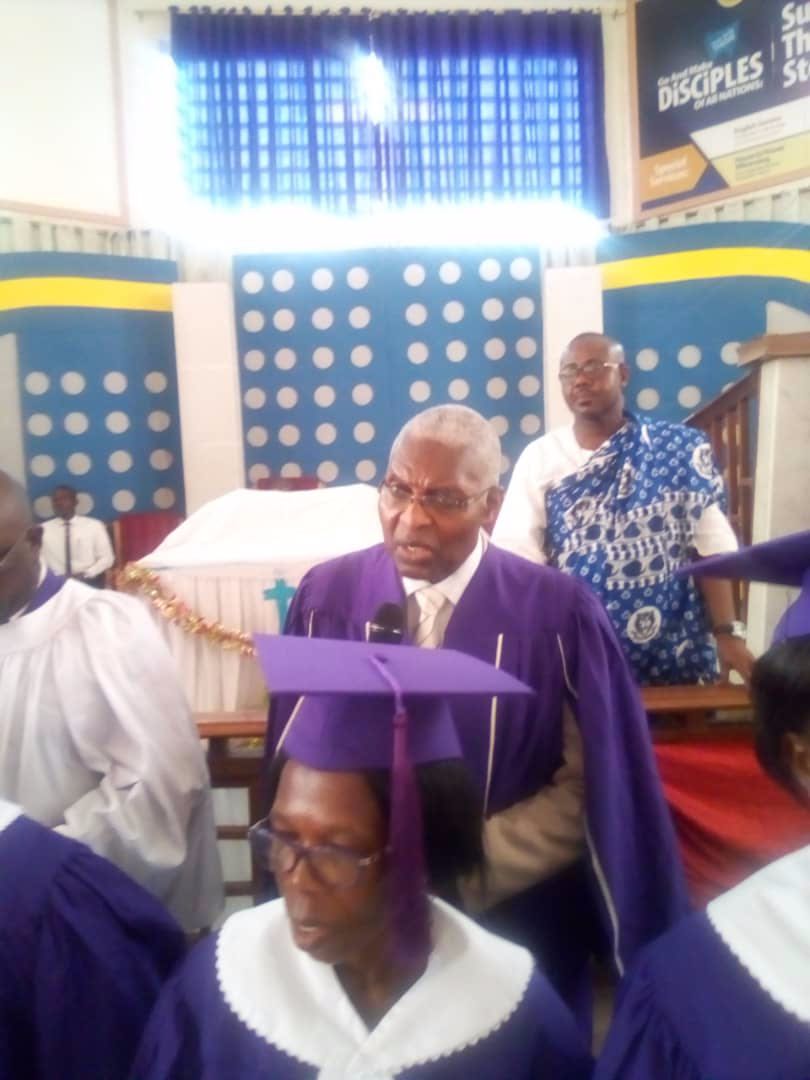
Early in his career, John’s wife, Joyce, was invited to participate in a Bible Study Fellowship prayer group. In 1990, the group established an Evening Women’s Class, and John saw God working firsthand through BSF. He soon joined a men’s prayer group, which evolved into an Evening Men’s Class, where John served as a substitute teaching leader.  

Over the years, John has served in various BSF roles, including his position on the board of directors, from which he is retiring after 12 years of service. When asked about his BSF experience, John immediately turns the conversation to God’s Word and BSF’s focus to magnify God and mature His people. 

“God has used BSF to deepen my relationship with Him and to strengthen (my) outreach work,” he said. I must say my commitment to BSF work has impacted every aspect of my secular work.” 

Creating a legacy

This is evident through John’s deep conviction to equip the next generation of physicists. In fact, John regards his mentoring work as one of the greatest blessings in his career. 

Citing the priest Jehoida, a little-known character in 2 Chronicles, John views biblical mentoring as a responsibility with far-reaching impact. 

In 2 Chronicles 24:1-2, Jehoida provided wise counsel to the 7-year-old king Joash, and “Joash did what was right in the eyes of the Lord all the years Jehoida the priest instructed him.” 

Through Jehoida’s guidance, the young king restored God’s temple and directed His people to right worship. At the end of Jehoida’s life, the prophet received the great honor of being “buried with the kings in the City of David, because of the good he had done in Israel for God and His temple” (2 Chronicles 24:16). 

“What good did Jehoiada do? He passionately mentored 7-year-old king Joash until he became a great king,” John said. “It is said that the Christian youth (the next generation) is the backbone of the Church. I believe this backbone can be strengthened through mentorship to make the next generation more effective in every respect.” 

As a young man, John learned from mentors in both his profession and his church. They were men who helped guide and counsel him through the challenges of work, life and faith. Today, John is filling that role for several young physicists, along with many others through church and BSF. 

“I am always challenged by Jesus’ statement in Luke 12:48b: “From everyone who has been given much, much will be demanded; and from the one who has been entrusted with much, much more will be asked,” John quoted. “On my return to Ghana, I soon realized that much had been given me, and so I needed to commit myself to serving my Lord and my nation. I asked for God’s grace, guidance and enablement to fulfill every demand, including mentorship.” 

Though challenging at first, John stepped into his mentoring role with a sense of humility and compassion, recognizing that true wise counsel comes from God alone. 

“Having someone in our lives to guide us toward faith and Christlikeness can be good and helpful,” John shared. “Even better is getting to know the Lord ourselves and learning to rely on the Holy Spirit to be our guide. That is making our faith personal. So it is with any type of mentorship. The mentor’s goal is to assist and guide his mentee to excel and become relevant in their chosen profession, be it sacred or secular, like the medical physics profession.” 

Like Jehoida, whose wise counsel impacted the Jewish nation, John’s mentoring work is making a significant difference in the medical physics field. 

One of John's mentees shared:

“Prof. John Amuasi’s mentorship style transcends academics. He affects the religious and moral lives of his mentees, as well. He has always provided wise counsel, which has shaped my personal and moral life as a husband and father of two. Not only his words of inspiration and encouragement make him a great mentor, (but also) Prof. Amuasi’s personal lifestyle is one big example that many young colleagues, like myself, have always admired. He always brings his mentees closer to know God and to live exemplary lives. This has resulted in him producing many great personalities who occupy great positions.”

This mentee’s doctoral research thesis won prestigious such awards as Best Poster Presentation Award at the Maiden University of Ghana Doctoral Conference in 2015 and the world’s Young Scientist Award by the International Union of Pure and Applied Physics (IUPAP) and the International Organization for Medical Physics (IOMP) in 2016.

Taking action

As believers, we have the unique opportunity to influence the next generation for Christ. Whether we serve in the children’s program at BSF, build relationships in the workplace or pour into younger BSF group members, God can use each of us to spread His wisdom from one generation to the next. 

Would you take a moment to pray about how God might want to use you in this way? Together, like John Amuasi, we can offer truth and encouragement to a lost world, one life at a time. 

Being effective in difficult conversations

Being effective in difficult conversations

Being effective

in difficult

conversations


Being effective

in difficult

conversations

BY DR. DARRELL BOCK
DALLAS THEOLOGICAL SEMINARY
My dear brothers and sisters, take note of this: Everyone should be quick to listen, slow to speak and slow to become angry, because human anger does not produce the righteousness that God desires. – James 1:19-20

W e have discussed that the initial goal in a difficult conversation is to seek mutual understanding of differences. Then we considered how we often undercut that goal.

Now we will look at how to participate effectively in such a conversation – three types of discussions and five methods to advance a conversation. Applying these approaches can help turn a debate into a more genuine conversation.

THREE types of discussions

In thinking about convictions and holding them, it is crucial to identify what kind of a discussion I am having. There are basically three types of conversations, although sometimes a conversation can have a mix of these factors. 

Real core difference

T his initial category involves those cases in which the nature of the starting points and suppositions is so great there is little chance for any common ground. The views being taken are diametrically opposed, and there is no real spectrum to work with in thinking about the topic.  

These cases are actually few and far between, but a few exist. It is important to understand how rare this category is. The debates over samesex marriage or abortion fit here. The human freedom of choice in both spheres versus how others see marriage or the beginning of life as divinely defined clash here. It is hard to find any common ground in such discussions with such diverse starting points.  

The challenge is how to handle this degree of difference relationally and in a shared social space. In the end, believers will contend that all will face ultimate accountability for these choices before God one day.  

They also will argue that the character of our society is impacted by the choices made here and that no such act is strictly private. This is why it is seen not just as a private matter by many people of faith. There is little doubt this category is the hardest to negotiate well, because the differences in perspective are so great.  

Differences between religions also fall into this category. Here, there is a chance that ethical commitments about how people should be treated can create some limited common ground even if there are different views on how one is saved, leaving a need for evangelism when the opportunity arises. 

All agree but "how" is the question

A second kind of category is where people recognize the same kind of goal but disagree on the best way to get there. An example is racial reconciliation. If we were to take a poll on whether we favor racial reconciliation, the positive response would be exceedingly high. If we asked how best to get there, we might have several dozen opinions.  

These are topics in which there is much potential for common ground. But there is much work that often has to be done on how or what combination of ideas might help us to get there.  

Discussion requires we be very good listeners and not assume our experience matches that of another person of different background. The potential for moving to fuller agreement is usually greater in this category than the previous one. 

Issues in biblical tension because of a fallen world

I d suggest this last category is by far more common. Here, there are sets of human or even biblical values that are in tension because we live in a flawed world. The issue is how to balance a set of competing concerns 

An example might be healthcare issues. Human concern says we should want people to get such care, but the realities of society say we have to be able to afford, as a people, how to pay for it. That raises all kinds of legitimate questions about how to balance all the layers of this conversation.  

Its easy to see how reducing this discussion to labeling prevents a real dive into the topic. People often make a mistake in this kind of conversation by choosing between the legitimate tensions in such a way as to negate one of them. This cuts out the possibility of wrestling with the balance or relationship between the tensions. Most of our political debates fall in this category, and we shortcircuit them by forcing a choice between tensions versus thinking through how to balance them. 

FIVE Methods to advance a conversation
Own our own junk.

T he first thing we can do is acknowledge where we come up short and own our own shortcomings. Rather than confess and pivot, we come to serious grips with our contribution, or our side’s contribution, to a problem with an issue. We actually engage that shortcoming and look to what can change, what should be done or how to think  about it another way. We fix or address our involvement in the problem. 

Stick to the issues.

A nother positive step is to stick to the issue at hand and move through topics one at a time.  

As we addressed last week, one thing a pivot does is change the subject and move to a discussion that favors your side. This can short-circuit real progress. Before you deal with something that needs attention, you try to jump elsewhere.  

Owning your own junk and proceeding carefully toward mutual understanding means working through the list of issues one at a time as much as is possible. One of the benefits of facing up to this is by acknowledging space for our own growth, which creates space for the other person to reciprocate. 

Be honest about our own concerns and convictions.

A n honest conversation doesn’t have to hide our concerns and convictions. A difficult conversation does not require us to abandon what we think. We just give more thought to how we say what we believe.  

We engage with an awareness of the relational level of the things we say and how we say them. So the only way to gain understanding is for each side to be clear about what they believe and why. We just want to be sure the rationale for what we believe is sound.  

Genuine engagement can help to determine that by exposing where we might have blind spots or might be missing something. The only way to get there is to be honest with what we are thinking and why. Yet, that needs to be done with gentleness and respect as we go along (1 Peter 3:13-16). 

Be honest about where we need to listen and learn.

B eing teachable and open is also a virtue in such conversations. This kind of recognition gives space to learn from the conversation. Partial knowledge, thought to be comprehensive knowledge, is actually dangerous. It closes us off to growing. Part of a genuine humility is knowing our limits. 

Parse layers within a view.

T his may be the most challenging aspect of such conversations. It is developing the ability to recognize and face the strong and weak parts of our own arguments. Many things for which I contend rest on varying layers of certitudesomething I am absolutely confident about versus something else that is simply more likely or probable. That difference impacts how tightly I cling to the view or conviction I have about a topic. 

I often say to my students, “You need a scale to rate your level of conviction. It runs like this.  

  • Level A: I am virtually certain about something. I am so certain I joke that I might be willing to argue with God about it. 
  • Level B: I am aware of disagreement here, but I am reasonably confident I am correct. 
  • Level C: If I am honest and we get to heaven and you turn out to be right, I will not be surprised.  
  • Level D: Let us both be honest and flip a coin because neither of us knows. 

This kind of scale can help me assess how strongly I should hold a particular conviction or subconviction. It also allows the possibility that I might move from one level to another in the midst of a conversation. 

In other words, growth and progress might come from within a conversation, not because I change my mind, but because I might be more self-aware about how strongly I hold a view and why. In such cases, the conversation has benefited  my own understanding. This allows me to tweak a view or give it nuance. It also guards against an allornothing mentality that has no room for contemplating options. Most hard conversations have layers of argument tied to any major subpoint in the conversation. The willingness to look for and think about these layers and pursue them can open fresh avenues in the conversation. 

Final thoughts

My point in working through this discussion on these kinds of issues is that our level of conviction should be tied to the kind of issue that is present. It also should be tied to an awareness of the judgments I make in coming to that conviction and how solid the ground on which my conviction stands. Convictions held on weak ground are worth reflecting on whether they should be better grounded or reconsidered.  

In all of this, one more point needs to be made. It is that the pursuit of tolerance can lead to withdrawal from another rather than real engagement. True respect means giving space for conflicting views to be aired in a discussion that is sincere about understanding where another person is and genuinely engaging them. That can mean when we assess our differences we might agree to disagree but not without first having made a goodfaith effort to understand one another. The authenticity of such a deep conversation is better in the long run relationally than pretending no differences exist or ignoring them. 

In this series, we have merely scratched the surface of having effective difficult conversations. But I hope some of these categories and techniques will help you be a better conversation partner in some of the more challenging conversations that life sends our way. 

Dr. Darrell Bock is senior research professor of New Testament and executive director for cultural engagement at Dallas Theological Seminary. He hosts The Table Podcast, leading discussions related to God, Christianity and culture.

Pin It on Pinterest