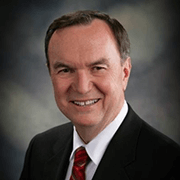


A Heart to Mentor

A Heart to Mentor

A Heart to Mentor

By Susie Rowan – BSF Executive Director

Each year, the BSF Board of Directors encourages the Executive Director to take a one-week sabbatical as a means to enjoy time and reflection with the Lord.  

This week is my sabbatical. 

Throughout this week, I’ve enjoyed long walks with the Lord.  

I’ve enjoyed moments of solitude with the Lord. 

I’ve enjoyed food and conversation with my family, to the glory of the Lord. 

And, perhaps because this year is my final year to serve as Executive Director of Bible Study Fellowship, I’ve found this week’s sabbatical rest to be particularly poignant.

A few weeks ago, I conducted a webinar for another organization on the topic of mentorship. Preparing for the webinar was a delight as I reflected on the past and present relationships that have marked my life so significantly. So many of those relationships were birthed in a BSF context. Now, this week, as I enjoy my final week of sabbatical rest, the Lord has continued to bring these relationships to mind. As I think back throughout my life and career, it is indeed true – we need one another. We need those who have gone before. And we need those who come behind.

Seasons to Grow

In my own life, I think of my grandfather. He was the first to intentionally invite me into his daily life. From the time I could walk, he invested in me. I went to his large corporate conferences and was introduced as a 7-year-old. A man nearly 60 years older than I was invited me to walk with him and to participate with him in his corporate life, even as a small child. This inspired me to lead.   

But there was more.   

My grandfather introduced me to Jesus. My grandparents were the primary Christian witness in my life for many years. I watched him lead as a businessman and worship as a believer.   

Then, when I was a young woman, my BSF Teaching Leader, Jacque Sanders, showed me the depth of commitment required to be a true Christ follower. She showed me the wisdom of patience and persistence in prayer. 

And when I was a missionary in Brazil, my BSF Area Advisor, Linda Hunt, taught me how to pursue others and love honestly without judgment.  

As Executive Director, a fellow board member, Bruce Smith, met me with kindness in mistakes, willingness to listen and wise council when needed. He showed me how to have difficult conversations with Christ as the center.  

And now, as I transition out of BSF leadership, I’ve sought council from my husband, Roger, board members Mark Bailey, Mike Duke and Garth Bolinder. In preparing for the future, executive coach Steve Graves and former business executives Ron DeLeenheer and John Duffy have shared their wisdom. 

I am also deeply grateful for my life-long friend, Sharon. Like many of the others, I met Sharon in a BSF class. Sharon is several years older than I am and gives great wisdom as we talk about marriage, grief, children, and grandchildren. She teaches me about aging gracefully. She is compassionate and creative. 

Each of these individuals has offered me wisdom, care, comfort, strength, and love – those same qualities they received as they have walked with Jesus through the years.  

But there are more.  

Seasons to Learn 

In 2017, Janie Stephens agreed to join the BSF staff as my Executive Assistant after we met at a BSF class in Dallas. Through the years, we have worked closely, and I have watched Janie grow professionally and spiritually. When she needed a formal “mentor” during her master’s degree program at Dallas Theological Seminary, Janie asked if I would fulfill the role. Janie learned not only from my successes but also through my failures because she was with me every step of the way.   

What began as a leadership relationship developed into a deep friendship. Though I’ve helped Janie through some difficult seasons, Janie has also taught me invaluable lessons about what it means to follow Christ.   

Through each of these relationships, I’m reminded of the joy-inducing gift of Christ-centered community. I have found that community in Bible Study Fellowship over the decades. Something unique happens in relationships centered around the Word of God. Ultimately, our goal in every friendship is to encourage one another to grow in Christlikeness, to look more like Jesus.   

Tethered Together

As I reflect on this concept, I recall an illustration from Melissa Kruger of The Gospel Coalition. In her book, Growing Together, Melissa recalls as a young girl watching her father work in the yard. On one particular day, Melissa’s father noticed a young thin tree in the yard bent over and suffering from the damaging effects of a recent storm. Melissa watched as her father took a rope and tethered the young tree to an older tree – one that was sturdy and strong. By tying the two trees together, Melissa’s father ensured the older tree could offer support and strength to the younger tree. 

The same is true for any mentoring relationship – a younger, less experienced individual is tethered to a more mature individual for a season so the younger individual might grow and develop.

With this in mind, take a moment to reflect on those God has use in your own life to guide and direct your steps toward Him.  

Hebrews 13:7 tells us, “Remember your leaders, who spoke the Word of God to you. Consider the outcome of their way, and imitate their faith.” 

And finally, ask God to reveal specific opportunities where you can help others around you grow and develop. Where can you share your perseverance in hope and the wisdom you have gleaned?

It is indeed true – we need one another. I pray that through Bible Study Fellowship you might find opportunities such as these — opportunities to mentor and be mentored through close relationships that develop around the study of God’s Word in community.  
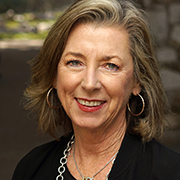
Susie Rowan

BSF Executive Director

Under Susie’s leadership as executive director, BSF membership has grown to serve more than 385,000 adults and 66,000 children worldwide, and the ministry has introduced BSF Online and WordGo Bible study platforms, and four new studies – IsaiahRevelation, and People of the Promised Land I and II (Part II coming in 2022). Susie and her husband, Roger, have been married for 45 years and have two children, Jerry and Sally, and four grandchildren.


 

Facing Challenges with a High View of God

Facing Challenges with a High View of God

Facing Life’s Challenges with a High View of God

By Terri Burroughs – BSF Board Member

What a year to study the book of Genesis! I saw God’s hand in every chapter as the world around me faced one crisis after another. We all know people who are still suffering, burdened by loss or struggling in their physical, mental or emotional health.  

This past year, I watched my dear friend Mike say goodbye to his wife Mary after a prolonged illness. Gripped by grief and loss, this couple spent her final days on earth  encouraging others toward the goal of Christ. They were determined to use every minute of her life for God’s glory.  

As we worked our way through Genesis, I asked myself, “How do people like Mike and Mary come through the crises of life with a sense of peace, hope, and joy?” I’m not talking about stoicism or optimism, but those who confront the brutal facts of their reality without surrendering to defeat.  

Digging into God’s Word

Take Joseph. How did he survive his brothers’ betrayal and go on to thrive despite the many years of enslavement and unjust imprisonment? 

What was at the root of Abraham’s willingness to leave everything familiar to him? Or his readiness to sacrifice Isaac at God’s command? 

What caused Job in the midst of life’s deepest loss to declare of God: “Though he slay me, yet I will trust in Him”? (Job 13:15) 

Have you ever wondered why Peter got out of the boat when Jesus said “come,” even though it made no sense? (Matthew 14:28-29) 

Are you humbled by our Lord Jesus Christ’s anguished choice to be obedient to God the Father even to the point of death? (Matthew 26:37-39) 

The The Profound, Yet Simple Answer 

In 2 Timothy 1:7-12, the apostle Paul described one of the characteristics these resilient people of God share.  

“For the Spirit God gave us does not make us timid, but gives us power, love and self-discipline. So do not be ashamed of the testimony about our Lord or of me his prisoner. Rather, join with me in suffering for the gospel, by the power of God. … I know whom I have believed, and am convinced that he is able to guard what I have entrusted to him until that day.

Paul had a high view of God.  The same high view as Abraham, Joseph, Job, Peter and my friends, Mike and Mary.   

So, if a high view of God enabled Abraham to pass the test and Paul to run the race victoriously, the question is, “How can you and I cultivate a view of God that enables us to stand firm and not be moved in impossible, exhausting, frustrating, hurtful and sometimes even dangerous situations?” 

This passage teaches that our view of God influences our perspective, helps us to embrace God’s purposes and anchors the hope we have in the person of God. 

As I learn from the people of God in my own life, their testimonies continually affirm these truths. Like the apostle, Paul they know the God in whom they believe. They recognize He alone is at the center of the universe.  

They know that while there is nothing wrong with the questions “Who am I?”  “What is my identity in Christ?” or “Why is this happening to me?” they must ask these questions within the context of “Who is God?” 

A high view of God is about getting the order right. It’s about guarding against the circumstances, situations, people, places, things, and attitudes that can diminish our view of God.  

When we believe and have confidence in God as the Creator and Sustainer of all, the Sovereign Lord of history, we shift our perspective from “me” to “He.” 

Shaping our Confidence

As we approach life with a high view of God, everything begins with the person of Almighty God. He is our confidence!  

Because God is sovereign and there is nothing outside of His will, we can trust that nothing is wasted in the lives of those in whom He reigns supreme.  

Because God knows and deeply cherishes us, we can stand boldly before His throne where we will always find mercy and grace.  

Because God is omnipresent, we can seek Him anywhere at any time. We never have to feel lonely.  

Because God is omniscient; and His thoughts and actions are perfectly informed by perfect knowledge, we can trust Him.  

Because God is the standard for what is good; and has given us a framework for living, we can approach life with clarity. We can act with integrity. We don’t have to react to the emotion or the circumstance. 

Because God can transform all things, you and I can change. We are not limited by our past and can grow to our potential. 

How can we walk through the disappointments, uncertainties, crises, and tragedies of life with a sense of hope, joy, peace, and confidence?  

For my friends Mike and Mary, the answer is knowing God, clinging to His truths and embracing His purposes. Personally, my hope is believing His promises and trusting in His goodness, sovereignty, and power.

Through the Father in Genesis, the Son in Matthew, and the enduring gift of the Holy Spirit we find a firm foundation; an anchor to weather any storm.  

Terri Burroughs

BSF Board Member – Former Banking Executive

Terri Burroughs has been involved with BSF since 2007 where she served as an Administrative Leader, Group Leader and Teaching Leader for the Raleigh/Cary Evening Women’s Class; and as Area Advisor for BSF classes in Eastern N.C. and Myrtle Beach, S.C. In addition, Terri has served on the Global Advisory Council for BSF and worked with the Headquarters Training Team and BSF Leaders from around the world. In 2020 Terri joined the BSF Board of Directors.

Terri spent more than 20 years as a banking executive where she led business operations, human resources, and learning and development teams. She has been recognized for her work in developing and implementing performance improvement initiatives among diverse work groups and has consulted with corporations in measuring the return-on-investment (ROI) of these types of initiatives. Her work in this area has been featured in industry publications. She has also served on the Board of Visitors for UNC-Children’s Hospital.

Terri and her husband Terrence are active in their church. Their daughter Mattie is engaged to be married.


God’s meaning in life’s meanwhiles

God’s meaning in life’s meanwhiles

God’s Meaning in Life’s Meanwhiles

By Pamela Bunn – BSF Board Member

Recently, a dear friend sat in an emergency room while doctors treated her husband, who had experienced multiple seizures earlier in the day. 

As the minutes and silence stretched on, my friend decided to contact the chaplain at her child’s school about a concern that was unrelated to the current crisis. 

For the first time in days, my friend, a busy physician and mother of four, was given the unscheduled time to sit, linger and have a much-needed conversation regarding one of her children. As God cared for my friend’s husband nearby and met the needs of her son many miles away, He comforted my friend with His presence as she waited.  

God was active all around in the meanwhile.

In the midst of emergencies, challenging work, difficult relationships, significant change, or the uncertainties of a pandemic, we naturally become absorbed in our current situation. We ask, “What should Ibe doing? What do I need? Where should I focus?” 

And while we concentrate on the immediate task that demands our attention and energy, we often fail to see what God is doing in the meanwhile. When we pause, step back, and consider our broad, high, transcendent God, we get a glimpse of His bigger picture and marvel at it. Our Omniscient God has His hands in every event and works in all of our meanwhiles. He is never overwhelmed. He sovereignly orchestrates all things for His good purposes, whether or not we ever see or understand them. When we look to the sky and see the thick of clouds, we know that behind them His light still burns intentionally and bright. 

Meanwhiles in Scripture

From Genesis to Revelation, God’s Word is full of His work in the meanwhiles. 

In Genesis 29, Jacob worked to win his wife, Rachel. During the next 20 years, he navigated his father-in-law’s deceptions, raised a family, built a thriving livestock herd and planned to return home. Meanwhile, unseen by Jacob, God was using these years to untangle Jacob’s past problems in Canaan. 

In Genesis 32, as he prepared to meet his brother, Jacob anticipated an attack from Esau’s men. During a sleepless night, he was consumed by “great fear and distress.” Meanwhile, God had gone before Jacob to soften Esau’s heart.

In Genesis 50, Joseph summarized his grasp of God’s work in his meanwhiles when he told his brothers, As for you, you meant evil against me, but God meant it for good, to bring it about that many people should be kept alive, as they are today.”

Throughout Scripture, God gives us glimpses of His sovereignty that encourage us to trust Him more deeply.

In Egypt, the Israelites groaned in slavery. Meanwhile, in Egypt as well as the desert, God was preparing Moses to deliver them from their captivity.

When Israel demanded a king, God gave them Saul. Meanwhile, He prepared David in the sheep fields to be a man after His heart and later take over the shepherding of His people.

And toward the end of the Old Testament, God seemed silent, sending no new prophets for 400 years. Meanwhile, He was preparing the world for the Messiah, His beloved Son who would die to redeem His people.

The Lessons We Learn

God works in ways visible and invisible. He is ever present and never confused. He handles every situation coincidentally, the known and the meanwhiles, neglecting none, and perfectly bringing about all He ordains. As with the Israelites of the Old Testament or the believers of the New Testament, God is accomplishing many things: 

He expands our understanding of His ways – they are vast, eternal and always good. 

He increases our appreciation of His power – it is limitless, ordered and never arbitrary. 

He enriches our worship of His greatness – His thoughts are beyond our thoughts, and His love has no bounds. 

Our Personal Meanwhiles

The same God who upholds the stars is working beyond what we see. He is the author of our meanwhiles. As He places kings, prime ministers, and presidents in authority, He also strategically places each of us where we are. 

When we feel thrown off balance, stretched by demands on our time and efforts, we can remember the meanwhiles of Genesis through Jacob and Joseph. 

We can ask, “How might God be working in my meanwhile? Is He refining a skill? Testing my faith? Adjusting my attitude or reordering my affections? Developing steadfastness and maturity? Meanwhile, what is He revealing about Himself?” 

Though we cannot understand all of God’s plans, we can trust that His work stretches beyond what we see. As we prepare our hearts and minds for Matthew, let’s take some time to reflect on God’s work during the past year. We can rest assured there is meaning in every meanwhile to come. 

Pamela Bunn

BSF Board Member

Pamela Bunn grew up in St. Louis, Mo., graduated from the University of Virginia with a BA in English, and started BSF as a near newlywed in 1982 in St. Petersburg, Fla. After moving to her husband’s hometown Raleigh, NC in 1986, she served as a GL, an STL, a TL and an Area Advisor for eastern North Carolina and South Carolina, until 2013 when she joined the BSF Board of Directors. She served on the St. David’s School Board of Trustees in Raleigh for twenty years, and has been a Director for Benjamin F. Edwards & Co in St. Louis since 2010, where she works part time as a special advisor to the executive division. Pamela writes a daily devotional blog, astherainandsnow.com (inspired by Isaiah 55:10-11), delighting to combine her love for words, God’s Word and her photography of God’s creation. She and her husband, Lee, live in Naples, Fla., and are active in teaching, discipleship and shepherding ministries, especially with young couples. They have three adult children, two daughters-in-law and five grandchildren.


Leadership Lessons from Joseph

Leadership Lessons from Joseph

Leadership Lessons From Joseph

By Mike Duke – BSF Board Member

The founder of Walmart, Sam Walton, once said “If you want a successful business, your people must feel that you are working for them — not that they are working for you.”

When I was working as “Chief Greeter,” or CEO, at Walmart, I was inspired by this mindset of servant leadership. It gave me the ideal opportunity to reflect on biblical models of leadership and I often used relevant Scriptures to describe specific leadership characteristics, even within a diverse, global organization such as Walmart.

This year in the Genesis study, I had the opportunity to reflect on servant leadership through the story of Joseph. Although he was not a perfect leader, we can learn from the leadership qualities that Joseph displayed throughout his life, from the beginning of his story in Canaan to the throne room in Egypt.

9 Lessons we learn from Joseph

Decide what Defines You

We all know the story of Joseph and the beautiful coat his father gave him. But we can even learn from this basic story that beautiful clothing does not make a great leader, and Joseph understood that. He had a close relationship with God, and much more strength and depth of leadership beyond his beautiful coat. So how do those we lead characterize us? In studying Joseph’s life, we see every day as an opportunity to choose what makes us memorable.

Make Peace With Adversity

In Genesis 37, we find Joseph in a ditch, or cistern. A wise business investor, Warren Buffett, once said, “When you find yourself in a ditch, stop digging.” This advice can apply to business, life and relationships. When Joseph found himself the cistern, he trusted God even through great adversity. Joseph did not fight his circumstances, but discovered God’s peace in each of these difficult situations. He came to realize that God uses adversity for good.

Welcome God’s Presence

In Chapter 39, Joseph’s boss, Potiphar, saw something in Joseph that was very special. He saw that the Lord was with him. Biblical leadership always shows the presence of the Lord, and the leader has complete trust in God. Can others see Him in us?

Expect Temptation and Be Prepared

People in leadership roles will often be tempted. Positions of power, authority and financial oversight can become sources of temptation. As Joseph gained leadership roles, he also faced intense temptation. He was certainly tempted aggressively by Potiphar’s wife. But before he was tempted, Joseph made a commitment to honor and integrity. In the throes of temptation, Joseph stood firm. Great leaders decide integrity cannot be compromised, and they make that commitment even before they face temptation.

Look For Opportunities to Lead

Joseph was certainly treated unfairly and was even sent to prison due to no fault of his own. But the Lord stayed with him and even provided leadership opportunities while in prison. From Joseph, we can learn how to make the best of difficult circumstances and even look for leadership opportunities that might be available in unlikely places. Whether we are at home raising children or at work leading a team, God values servant leadership in all circumstances. Through His eternal perspective, the greatest leaders among us are the Godliest.

Give Credit to Those Who Contribute

When others wanted to give credit and praise to Joseph, he turned it around to give all praise and glory to God. When interpreting dreams, he was clear that God’s skills, not his own, were on display. Great leaders embody humility, and they will not accept personal glory and praise. They tirelessly credit success to others that contributed to the accomplishments.

Place Your Trust in God’s Plan

In Genesis 41, we get a good understanding of Joseph’s trust in God’s plan. Joseph expects seven years of prosperity to be followed by seven years of famine, so he prepares for the upcoming difficulties. Joseph trusted God, and as a result, he received great wisdom in how to deal with the prosperity and how to prepare for the future.

Don’t Be Afraid to Show Emotion

In the final chapters of Joseph’s life, we read a detailed account of how he interacted with his brothers and his father. Faced with the family members who betrayed him, Joseph displayed compassion, forgiveness and love. These chapters are often emotional, showing one of the greatest leaders in Egypt weeping.

Some leaders have the mistaken impression that they should not show emotion, but they are so wrong. Strong leaders show they care about others, and sometimes that can mean grief. Display of emotion is a good, sincere characteristic because it shows a caring, loving leader.

Serve in All Circumstances

In the final chapters of Genesis, Joseph showed he loved his father and brothers, and was able to forgive. But going beyond forgiveness, Joseph proved his servant heart when he blessed and provided for his family. Great leaders care about every single person they lead, just as the shepherd cares about every single sheep in the flock.

Leading Where God Calls

Though we may not be called to lead a nation like Joseph, God calls all of us to lead in some way. Whether in business, BSF leadership, our local church, our community or leading our family, He provides the framework for serving effectively wherever we are called.

As we close our study of Genesis, we remember Joseph as an example of a leader who selflessly served. But in preparing our minds for Matthew, we look forward to Jesus, not as an example, but as the fulfillment of a servant leader.

Through Joseph’s example, we find practical leadership application. But through Christ’s sacrifice, we discover the power to put these steps into practice.

Mike Duke

BSF Board Member – Former WalMart Executive

Michael T. Duke has served on the BSF Board of Directors since 2014. Mike was an active class member for several years and his wife, Susan, has served as a Class Administrator for more than 20 years. Mike joined Walmart in 1995, and over his 19 years with the company led the logistics, distribution and administration divisions as well as Walmart U.S. In 2005, he was appointed to vice chairman with responsibility for Walmart International. Before joining Walmart, Mike had 23 years of experience in retailing with Federated Department Stores and May Department Stores. Mike is a member of the National Academy of Engineering and currently serves on the board of trustees of the Georgia Tech Foundation and Chick Fil A. He also serves as an operating executive for The Carlyle Group. Mike graduated from Georgia Tech with a bachelor’s degree in industrial engineering. He was awarded honorary doctorate degrees from Georgia Tech and the University of Arkansas. He and his wife, Susan, have two daughters, a son and five grandchildren.


The Character Of Everyday Choices

The Character Of Everyday Choices

The Character of Everyday Choices

Dr. Mark Bailey, Chancellor – Dallas Theological Seminary

Alexander Whyte writes in his book Bible Characters about the choices made by Abram and Lot, recorded in Genesis 13 and 14, “What a man chooses, and how a man chooses, when opportunities and alternatives and choices are put before him – nothing more surely discovers a man than that.   

In Genesis 13 we have a great example of the choices of the flesh and the choices of faith. Lot has eyes that are drawn to the externals of what can be seen, while Abram is asked to have eyes of faith, to see what is not yet visible. Both lifted their eyes, but each saw something different 

The occasion that prompted their choices was the conflict between the herdsmen of Lot and those of Abram. To use an American Old West expression, each thought “this town is not big enough for the both of us.” So, Abram graciously gave Lot the opportunity to choose a portion of the land on which he would settle, and Abram promised to go in the opposite direction.  

What can we learn from these respective choices?

First, let’s look at the choices of the flesh made by Lot.  

Lot looked around” and chose the Jordan Valley, which at the time was very fertile and well-watered. Ironically, it brought back the visual memories of Egypt and Eden. Lot settled in the cities of the valley and located himself and his family near the wicked city of Sodom. All of these were self-serving choices based on selfsatisfaction, sight and security.   

On the other hand, we see the choices of Abram. In reality, these are actually God’s choices. In Genesis 13:14-15, God tells Abram, “Look around from where you are,” and look in all four directions. “All the land you that you see I will give to you and your offspring forever.”

In this section, we see a reaffirmation of the covenant. Abram is promised a land not yet his, and generations of descendants not yet here. These promises of God required great faith to believe.

Thtext is specific in Genesis 13:8, that the Canaanites and Perizzites were still living in the land. The conquest and settlement under Joshua would not happen for another 400 years. Furthermore, no child has yet been born to Abram. But God gave Abram a physical symbol of His promise. When He commanded Abram to walk the length and breadth of the land, He fulfilled an ancient practice that symbolized the receipt or appropriation of a land acquisition. Walking in faith, Abram obeyed.

What do these choices actually reveal?

The details of Genesis 13 may be more significant than casual reading may produce. The characterization of Lot opens with a statement of discontent and struggle between his and Abram’s servants, along with Lot’s self-serving choices. It ends with Lot settling in Sodom, mentioning the city’s extreme wickednessBy contrastthe discussion of Abram begins and ends with sacrifice and worship, first at Bethel and then at Hebron (Genesis 13:4, 17). 

When we turn the page to Genesis 14, these same themes of sacrifice and worship by Abram continue. This time the struggle is not within the clan of Abram, but between a coalition of kings and the kings of Sodom and Gomorrah. The coalition of forces under the leadership of Kedorlaomer, King of Elam, captures Sodom, which includes Lot and his family. At risk to himself and his own men, Abram engages the conquerors and rescues his nephew.

Upon the conclusion of his successful rescue mission, we have the fascinating account of Abram being blessed by Melchizedek and Abram paying tithes to him. By refusing any reward, even as little as the lace of sandal from King of Sodom, Abram knows God is his protector, the keeper of all His promises, and that every blessing comes from Him. Genuine worship is the rightful recognition of the value and worth of God in our lives.

God’s command to Abram to look in all directions to see what God would give him reminds us of another passage, Paul’s prayer in Ephesians 3:18 – 19, that they “may have power, together with all the Lord’s holy people, to grasp how wide and long and high and deep is the love of Christ, and to know this love that surpasses knowledge – that you may be filled to the measure of all the fullness of God.” Surely, God’s promises are always better than the choices we make for ourselves. May our eyes be lifted to see what God has promised to us, and may our choices match His choices.

“Life is a matter of choices, and every choice you make makes you.” – John C. Maxwell


Dr. Mark Bailey

Chancellor – Dallas Theological Seminary

Dr. Mark Bailey, member of the BSF Board of Directors, is the Chancellor and Senior Professor of Bible Exposition at Dallas Theological Seminary in Dallas, Texas, where he has served for 35 years. Prior to assuming the seminary’s presidency, Dr. Bailey served as Professor of Bible Exposition and Vice president for Academic Affairs and Provost. Alongside college and seminary teaching he pastored for twenty years in Arizona and Texas. He was seminar instructor for the Walk Thru the Bible Ministries for 20 years and is in demand for Bible conferences and other preaching engagements. He is currently on the teaching team at Christ Chapel Bible Church in Fort Worth Texas.

Enduring the Unexpected

Enduring the Unexpected

Enduring the Unexpected

By Susie Rowan – Former BSF Executive Director

Unexpected.  

Perhaps that’s one way to describe the events and realities of our world today. 

Of course, there are other words. The events of 2020 and 2021 have been described as “unprecedented,” “unparalleled,” “unending.” But I think “unexpected” captures it well.  

Let’s think about it: 

  • A global pandemic.  That was unexpected. 
  • The ensuing fear, isolation, quarantine, and separation.  That was unexpected. 
  • The mass turmoil, tension, loss, and dissension.  That was unexpectedand heartbreaking.

Recently, like you, I’ve mourned the unexpected loss of friendsMany of us on the BSF staff are in daily contact with BSF friends in India, Brazil, Madagascar, Kenya, and other communities where  suffering continues through the rising pandemic. As I reflect on these realities, I have taken comfort from our study of Joseph’s life in Genesis 3750.  

Joseph certainly endured many unexpected realities. At a young age, Joseph’s dreams and expectations were highYet it was only a matter of time before those dreams were seemingly dashed and those expectations seemingly crushed. Rather than an immediate and expected ascension to leadership, Joseph unexpectedly endured:

  • Betrayal 
  • Slavery 
  • False accusations 
  • Imprisonment 

And yet what did God do with Joseph’s unexpected circumstances? 

The entire book of Genesis culminates with the truth of Genesis 50:20 as Joseph declares to his brothers, “You intended to harm me, but God intended it for good.” 

Even in the most unexpected, most unwanted circumstances of Joseph’s life, God did the unexpected – He brought about good. Joseph’s story reassures us that the Fall, sin, and suffering have not and cannot thwart God’s ability to affect good in our livesThe same Creator God who declared “and it was good” in Genesis 1 is the same Creator God who intended it for good” in Genesis 50.  

Praise God!  

Genesis is Only the Beginning

As we fast forward through history and the Old Testament, we find time and time again that God works in unexpected ways, in the unexpected places of life.

No doubt this truth is most profoundly embodied through the Person and work of Jesus Christ,” who is “God with us” (Matthew 1:23).

In fact, as we anticipate next year’s BSF study of Matthew, we proclaim and celebrate the truth that He is our “Unexpected King.”

But how was Jesus unexpected?

After all, in many ways He was completely expected. Since God’s proclamation in Genesis 3:15 that the woman’s offspring would crush the serpent’s head, the Messiah had been long awaited, long expected. However, though the Messiah’s appearance was long expected – even prophesied – many of the details of His appearance were not.

Though the people expected the Messiah to appear in Bethlehem (Micah 5:2), they did not expect He would appear in what looked like scandal (Matthew 1:18-19).

And though the people expected a King (Isaiah 9:6-7), they did not expect this King would be worshipped by pagan star followers yet missed by His own Jewish people (Matthew 2:1-12).

The people did not expect the King’s herald would be a man dressed in camel’s hair eating locusts and wild honey (Matthew 3:1-4).

They did not expect the King’s message would be, “blessed are the poor in spirit … the meek … the persecuted” (Matthew 5:3-12).

It was unexpected that this King would come to serve (Matthew 20:28). And unexpected for this King to assert the last would be first (Matthew 20:16).

It was unexpected our King would die. And unexpected our King would rise.

Facing the Unexpected

What unexpected circumstance do you face today? For me, it is not knowing what to expect as we transition from San Antonio to a new season in Kansas City near our family. Retirement is expected, but I am sure there is much ahead that is not!

God delights – perhaps even specializes – in working in and through the unexpected circumstances of your life and mine. Where we feel most desperate, most fearful, most needy and shameful, God is powerfully present to do the unexpected.

Will you bring your concerns to Jesus? He is our “Unexpected King.” Though His ways are not our ways, He will prove faithful. He will be perfectly faithful to you while being perfectly faithful to me. He will be perfectly faithful to His church while being perfectly faithful to BSF and to other ministries that serve Him. And in the end, we will find His ways exceed even our greatest expectations.

Susie Rowan

Former BSF Executive Director

Under Susie’s leadership as executive director, BSF membership has grown to serve more than 385,000 adults and 66,000 children worldwide, and the ministry has introduced BSF Online and WordGo Bible study platforms, and four new studies – IsaiahRevelation, and People of the Promised Land I and II (Part II coming in 2022). Susie and her husband, Roger, have been married for 45 years and have two children, Jerry and Sally, and four grandchildren.
 

Pin It on Pinterest